
We all have the power to make a positive impact on the environment, and small every day habits can add up to make a big difference. Here are some simple things you can do to make a positive environmental change:
- Reduce your energy consumption: One of the easiest ways to reduce your environmental impact is to use energy more efficiently. This might include turning off lights and electronics when they’re not in use, using energy-efficient appliances and light bulbs, and reducing your reliance on fossil fuels. By using energy more efficiently, you can save money on your energy bills and reduce your carbon footprint.
- Reduce your water consumption: Water is a valuable resource, and many areas of the world are facing water shortages. One way to reduce your environmental impact is to use water more efficiently. This might include taking shorter showers, fixing leaks, and using drought-resistant plants in your landscape. By using water more efficiently, you can help to conserve this valuable resource.
- Reduce your waste: Another simple way to make a positive impact on the environment is to reduce your waste. This might include recycling, composting, and opting for products that come in minimal packaging. By reducing your waste, you can help to conserve resources and reduce the amount of garbage that ends up in landfills.
- Use public transportation or walk or bike: Transportation is a major contributor to greenhouse gas emissions, so consider using public transportation, walking, or biking instead of driving. Not only will this reduce your carbon footprint, but it can also have health benefits and save you money on gas.
- Support sustainable practices: You can also make a positive impact on the environment by supporting sustainable practices. This might include supporting companies that use sustainable materials, adopting environmentally-friendly habits in your own life, and advocating for policies that promote sustainability. By supporting sustainable practices, you can help to create a more sustainable world for future generations.
- Eat a plant-based diet or reduce your meat consumption: The production of meat has a significant impact on the environment, so reducing your meat consumption or eating a plant-based diet can be a simple way to make a positive impact. Plant-based diets require less land, water, and energy to produce, and they generate fewer greenhouse gas emissions.
- Support conservation efforts: Another way to make a positive impact on the environment is to support conservation efforts. This might include supporting organizations that work to protect natural habitats and wildlife, or advocating for policies that protect the environment. By supporting conservation efforts, you can help to protect the planet and the animals that depend on it.
By making small changes to your everyday habits, you can make a positive impact on the environment. Every small action you take can add up to make a big difference, so don’t be afraid to start small and work your way up.
]]>
Single-use plastic is a type of plastic that is used only once before it is thrown away. These types of plastics are typically found in items like water bottles, straws, and takeout containers. While single-use plastics can be convenient, they also contribute significantly to plastic pollution. Here are some of the problems associated with single-use plastic:
- Litter: Single-use plastics are a major source of litter, which can have negative impacts on the environment and wildlife. When these plastics end up in the ocean, they can break down into smaller pieces called microplastics, which are harmful to marine life and can enter the food chain.
- Pollution: Single-use plastics contribute to air and water pollution. The production of plastic requires the use of fossil fuels, which releases greenhouse gases into the atmosphere. And when plastics break down, they release chemicals that can pollute the air, water, and soil.
- Waste: Single-use plastics contribute significantly to waste, as they are used only once before being thrown away. In 2018, it was estimated that only 9% of all plastic produced has been recycled. The majority of single-use plastic ends up in landfills, where it can take hundreds of years to break down.
- Resource depletion: The production of plastic requires the use of non-renewable resources, such as oil and natural gas. These resources are finite, and their extraction can have negative impacts on the environment.
- Human health: Some single-use plastics contain chemicals that can be harmful to human health. For example, some plastics contain bisphenol A (BPA), which has been linked to health problems like hormonal disruption and cancer.
The good news is that there are ways we can reduce our reliance on single-use plastics. Some simple steps include using reusable shopping bags, water bottles, and containers, and choosing products that come in minimal packaging. We can also advocate for policies that reduce the use of single-use plastics, such as banning certain types of plastic or implementing fees for their use. By making these changes, we can help to reduce plastic pollution and protect the environment and our own health.
]]>Did you know that every year 300 million tons of plastic are produced and from which only approximately 9% is recycled? So, have you ever thought about what happens to plastic when you throw them away?

Plastic pollution is the accumulation of synthetic plastic products in the environment that adversely affects human health, ocean health, the health of animals and birds, coastal tourism, food quality, and safety and contributes to climate change. Plastic pollution is known to be a pressing environmental issue around the world and the rapidly increasing production of plastic has overwhelmed the ability of the world to deal with them.
Where does all the plastic waste go?
This is the biggest question one needs to ask. If we keep on increasing plastic production, what does that mean for our world? It’s a common belief that most plastic ends up in the recycling facility but miserably this is not the truth. This ends up harming the environment. Sadly, seventy-nine percent of the plastic waste produced from plastic products lies around the oceans and landfills. Moreover, 88% of the plastic waste is found stranded, lingering along the beaches and shorelines, deep under the rocks and sand, or buried near the coastline. These mismanaged plastics enter the rivers and eventually get dumped into the water bodies.
These ten rivers carry greater than ninety percent of the plastic waste that ends up in the water bodies
Why does the plastic we use every day end up in the water bodies?
- Throwing plastics in the bin instead of recycling them. Plastic that we put in the bin usually ends up in the landfill and during its transportation, it is usually blown away because plastic is very lightweight so it clutters around the drains and enters the water bodies.
- Litter that is dropped on the street is carried with the wind and rainwater thus entering into the rivers and streams through drains
- Sometimes the products we daily use are flushed down the toilets including cotton buds, sanitary products, and wet wipes. Some microfibers are sometimes even released into the waterways during laundry these microfibers cant be filtered out by the wastewater plants and are consumed by the aquatic species, therefore, ending up in our food chain.
How to reduce plastic pollution?
By using an integrated waste management hierarchy, the life cycles of plastics can be improved thus reducing plastic’s impacts on the environment
What government should do?
There are a variety of actions government can do:
- Offering incentives for recycling
- Running awareness campaigns for public
- Banning the use of harmful plastic products or introducing levies
Industries, governmental organizations, and research institutions need to work collaboratively for the redesign of products and rethink the ways for their usage and disposal to reduce microplastic wastes from synthetic textiles, tires, pellets, etc.
Furthermore, society and consumers should shift to more sustainable consumption patterns. Solutions should be focused on managing waste by considering the whole lifecycle of the plastic infrastructure, household use, and the design of infrastructure.
Also, there is a need to increase funding for research and innovation to provide manufacturers, policymakers, and consumers with the evidence needed for the implementation of behavioural, technological, and policy solutions for addressing marine plastic pollution.
]]>A Circular Economy is not just about saving resources but also about sustainable relationships. Facts have shown that one ton of solid waste recycling pays $101 more in salaries than being disposed of in landfills. This blog will help readers in understanding the concept of circular economy, its importance, and its benefits for the environment and economic growth.
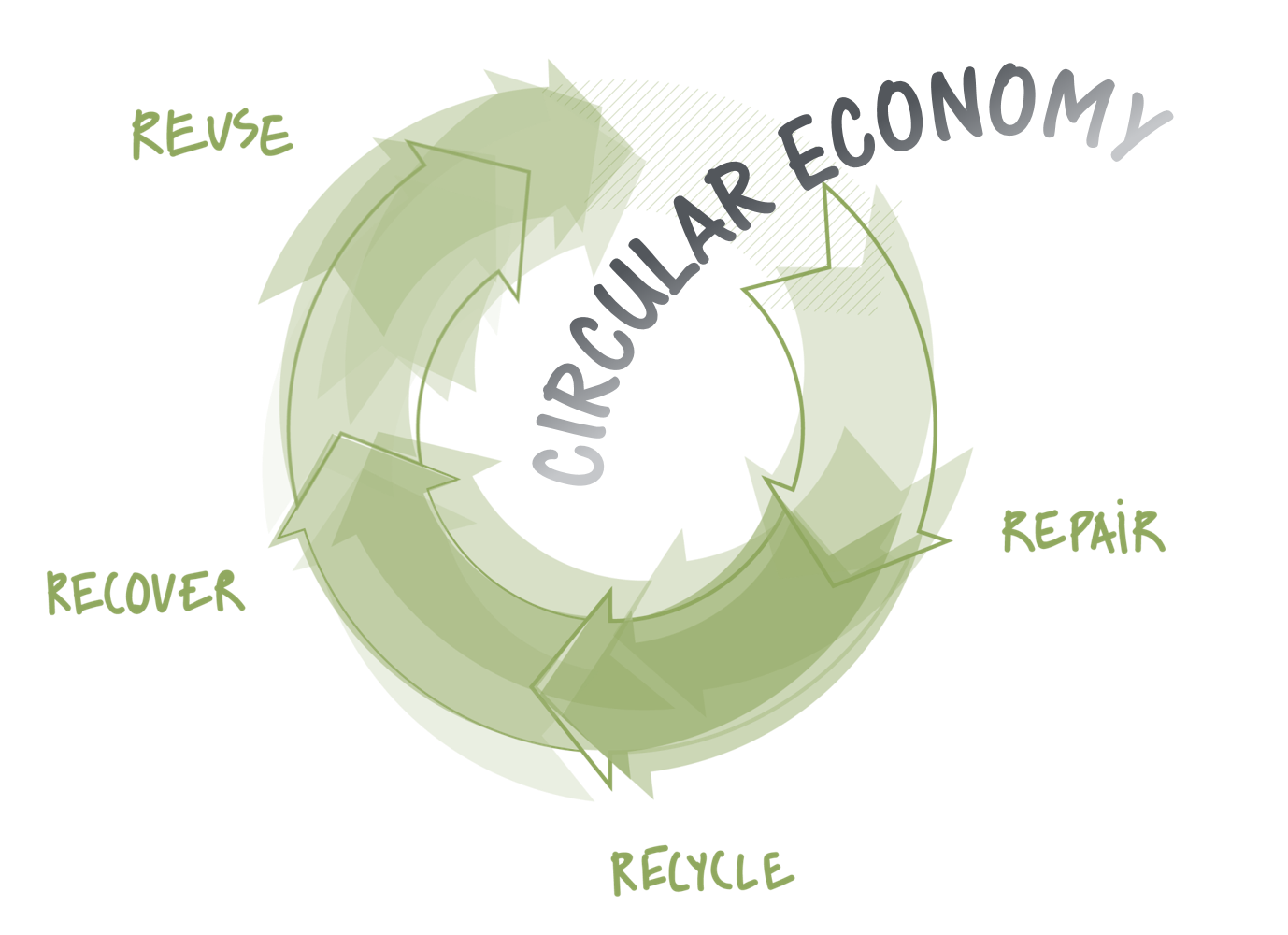
Circular Economy Overview:
An economic system tackling global challenges including climate change, loss of biodiversity, waste, and pollution is considered a circular economy or circularity.
By design, this economy is invigorating and recovering. In overall system health, economic activity builds and rebuilds in a circular economy. This concept of circular economy highlights the importance of an economy ineffective working at all levels i.e., small and big scale businesses as well as organizations and individual working levels.
Principles of Circular Economy:
It is based on the principles of designing out waste as well as pollution whereas keeping materials and products in use.
- Design out waste and pollution
- Retain materials and products in use
- Regenerate natural systems
What does Circular Economy do?
A circular economy improves the efficiency of resources by keeping products, materials, equipment, and infrastructure in use for a longer period.
Circular economy not only made modifications in reducing negative linear economic impacts but also signifies a systematic shift in building long-term flexibility, produces business and economic opportunities, and offers many social and environmental benefits.
Why Shift to a Circular Economy?
The population of the world is growing and so is the demand for raw materials but the crucial raw material supply is limited. As a result of this, many developing countries are dependent on others for raw materials.
Moreover, the extraction of raw materials also impacts negatively the environment in terms of CO2 emission and energy consumption. A circular economy provides the smarter use of raw materials hence lowering environmental emissions and making a sound economy.
It’s time to Rethink!
A circular economy allows rethinking and redesigning our ways of making things and stuff. It explores the idea of powering the system along with renewable energy by designing products that can be made and remade resulting in a sound economy. It answers the question that whether creativity and innovation help in building a restorative economy.
What Benefits it give?
A circular economy does provide operational along with strategic benefits and brings the potential for value creation within spheres of economy, business, environment, and society.
- Fewer Greenhouse Gas Emissions:
A circular economy helps reduce greenhouse gases as it utilizes renewable energy which is less polluting compared to fossil fuels. Moreover, fewer materials and production processes are involved in this providing sound and functional products.
- Healthy and Resilient Soils:
In the farming system, the principles of the circular economy make sure the return of important nutrients to the soil through composting. This process reduces the exploitation of soil and the natural ecosystem. The organic waste is returned to the soil making the soil healthier allowing a natural balance in the ecosystem.
It must be noted that soil degradation costs $40 billion annually worldwide and contains hidden costs in form of the use of fertilizers, biodiversity, and landscape loss. The use of a circular economy proves to be useful in tackling these issues.
In Europe’s food systems, a circular economy has significantly reduced 80% the usage of fertilizers contributing to the natural balance of the soil.
- Reduced Negative Externalities and Economic Growth:
The negative externalities including soil, water, air pollution, and land use are better managed by following the principles of the circular economy.
There will be an increase in the revenues from circular activities following the increased GDPs.
]]>Did you know each year 3.3 million tons of plastic end up in landfills with plastic packaging contributing to half of the total?
In this blog, we will first get to know what is food packaging waste, discuss the impacts of food packaging waste on the environment and lastly, we will find out some practical ways of reducing food packaging waste.

Food packaging waste consists of containers that are difficult to be degraded and are non-compostable. It includes packages like wax, metal, ceramics, plastics, glass, many cardboards etc.
The impacts of food packaging waste on the environment
Of millions of tons of solid waste produced in the US, 63% has been derived from packaging material. According to US Environmental Protection Agency (USEPA), almost half of all municipal solid waste is produced food packaging waste and is regarded as an issue of utmost concern. On an almost daily basis, we throw away the food packaging containers like glass, plastic, and aluminum packaging hence we are indirectly contributing to the issue of degradation of the climate. Generally, food containers we see on daily basis in grocery stores are designed for single-use and are typically thrown away rather than getting recycled or reusing it.
Each type of packaging uses a lot of resources like water, energy, minerals, petroleum, chemicals, fibres, and wood for its production. The manufacturing of packaging material often generates air emissions including heavy metals, greenhouse gases, and other toxic contaminants. Moreover, some impacts of food packaging waste on the environment are discussed below:
Air pollution
Dry particles and dust particles hanging in the air in the form of gasses, smoke, and vapours are the cause of air pollution in the environment. For example, wasteful packaging increases incineration activities which leads to the production of hazardous gases like CFCs, vinyl chloride, and hexane which typically infiltrate the environment.
Water pollution
Food packaging production contributes to increasing water use along with causing water pollution. For example, plastic pellets used in the packaging can affect the water because the pellets leach down into the water by releasing toxic chemicals.
Litter Waste
Some percentage of packaging waste is accumulated in our environment in the form of litter. Many people complain about litter because it poses health hazards to human beings too. For example, excessive cardboard packaging can be a fire hazard while broken glass causes injuries. Also, accumulation of litter can result in the clogging of storm drains and can also be a source of algal blooms in water thus impacting wild and aquatic life which use this water. Litter also attracts the vermin population by creating breeding grounds, therefore, threatening public health.
Landfill space
The majority of packaging material takes a long time to be degraded for example Styrofoam cups and plastic bag takes 500 years or forever to be degraded, hence decreasing landfill space. Chemicals from the packaging material including dyes and inks from labelling can leach into soil and groundwater.
Birds’ life and Sea life
Every year, plastic packaging of food kills over one million marine birds both directly or through the food chain. Usually, plastic packaging got tangled up or caught and gets them either killed or injured. Moreover, the ingestion of plastic causes fatalities for sea life. Every year around 100,000 marine animals die because of waste pollution, especially by plastic accumulation in water bodies.
Some practical ways of reducing food packaging waste
- Buy loose products like Vegetables, and fruits instead of using pre-packed products
- Reusing packaged products such as plastic bags, paper, and wrapping paper whenever possible
- We should carry our water bottles, reusable bags, straws, coffee cups, and utensils when needed
- We should make a meal plan. Don’t buy extra products. Plan a shopping list and just buy what you need.
- If food packaging products can’t be avoided, we should find recyclable packaging products ideally made from recycled materials
A beginners guide that will help you take your first steps into transitioning your kitchen into an Eco Kitchen! Start reducing your ecological footprint today by focusing on the room that produces the most waste; the kitchen.
_______________
Taking The First Step
Millions of tonnes of plastic is thrown out yearly and ends up filling our landfills, waterways and oceans. Many of us have fallen into a pattern of quick consumption using single‑use plastic for our own convenience. It may make our lives easier, but it makes it much more difficult for the natural environment to thrive. However, with already existing solutions and this guide, we can change our daily habits to support a more sustainable future. Take this first step, and let’s make a change for ourselves and future generations.
Analyzing Old Habits
When trying to change anything in your life, you first need to take some time to reflect on your current lifestyle habits and make yourself aware of the current situation. A good place to start is by noting everything you throwaway in your kitchen trash bin and what you place in the recycling. This allows you to understand the types of items you are throwing out most often, if there is anything you could be recycling instead and will also make you aware of how much waste is piles up per day.
Recycling ‑ The Right Way
A really easy and free way to reduce waste is by ensuring your household recycling process is inline with your local recycling organizations. Check with your local community recycling program to get an update list of what is acceptable in the compost, and recycling bins. Generally, if a recyclable material has food or other residues on it, it will not be recycled and oftentimes, the entire bin is thrown away because of the containments. This is why it is so important for us to do our part to clean and organize the recycled materials and place them in the correct bins. You can also up‑cycle any glass jars for food or other storage!
Buying & Storing Food
A lot of our waste comes from transporting and storing food. This is tougher to avoid because a lot of the options for certain foods or brands are only offered wrapped in plastic, but here are a few tips that will help you begin to minimize it!
1) Shop Local ‑ if you have local bakeries, farmers markets, retailers, ect. they will oftentimes allow you to bring your own container or packaging. (Ask before hand)
2) Buy in Bulk ‑ buying in bulk reduces packaging and potentially saves you money because instead of having to purchase a bunch of single packages multiple times, there is one larger package that last’s for longer.
3) BYOC ‑ the best way to do ‘zero‑waste’ groceries is to bring your own container, tare, fill, and weigh the items you’d like to purchase! Unfortunately, this is less common right now with Covid‑19 protocols in place, however, check with local grocery stores or near by eco‑friendly shops.
Introducing Sustainable Solutions
When it comes to reducing your waste in the kitchen, there are a few essentials that will help you eliminate unnecessary plastics.
♼ Plant‑based scrub brushes and loofah sponges are a sustainable alternative for plastic kitchen brushes and synthetic kitchen sponges.
♼ Reusable silicone bags are a sustainable alternative for single‑use plastic zip bags.
♼ Stretchy silicone lids replace single‑use plastic wrap or other plastic films.
♼ Cotton produce bags are a reusable alternative for single‑use plastic produce bags.
Reusable Alternatives
Single‑use plastics are used to store, move, and keep our food and water “clean”. But these plastics break down into undetected micro‑plastics and so we unknowingly eat and drink plastic containing harmful substances. The BPA’s and other toxic chemicals found in plastic are damaging to human health and research has shown it to be the cause of a number of related health concerns. You are better off using glass, silicone, paper or cotton to store and handle food. Microplastics are also a huge threat and health concern for our wildlife and marine life. Scientists have discovered many deceased animals with plastics tangled in their organs and many more have been found in life threatening conditions because of the harms of single‑use plastic.
Natural Plant‑Based Alternatives
Utilizing products like these 100% plant‑based dish scrubs will help prevent unnecessary plastic that would otherwise end up harming eco‑systems and wildlife. Being completely biodegradable, these are truly zero‑waste products. Once you’ve got your full‑use from the sponge & brush, you can either place them in compost bin or even burry in your backyard to decompose naturally!
One Stop Shop
Eco Kitchen has put together the perfect starter kit to make it easy to switch over to a more sustainable life style, starting in the kitchen where most waste in the household comes from. This comprises of all the essential eco‑friendly products that minimize a household’s ecological footprint. We know trying to purchase items individually can be costly and time consuming, so we’ve made simple a solutions for you!
Plastic‑free Shipping + Gives Back to The Earth
The Eco Kitchen Starter Kit is packaged and shipped to your door with love, and without plastic. There are so many benefits to starting your own Eco Kitchen. It’s about time we take the future into our own hands and make some changes that build momentum for a green future! Check out the current deals for it today with the link of my bio!
Remember Why
Why are you doing this? Make this change because you care about your own, and families future. You want to limit ingesting micro‑plastics and other toxic chemicals that are unhealthy for humans such as BPA. Make this change because you know how devastating the damage that our plastics are causing our natural environment, wildlife and ecology. Make this change because you care about the quality of life, or even just the life of future generations. Keep in mind why you chose to make this change, and how important it is to continue on with this new clean way of living. And most importantly, be proud of yourself for actively making little choices that result in a large positive changes.
This weekend will be full of Black Friday Promotions and Cyber Monday deals everywhere online and in stores, however, a less known shopping day that also occurs this weekend is Small Business Saturday. This weekend you have a choice to choose to shop from large corporations who often dominate the market, exploit workers, and damage the environment with no repercussions… OR you can choose to support your local economy and business owners with shopping local. In a time like this, it is more important than ever to be giving back to our community members and business owners who have been working so hard to stay open. This year, instead of jumping onto the best deals, take the time to consider what deals your local small businesses are offering! Who knows, you might even find some hidden treasures.

As a new small business ourselves, we wanted to take this opportunity to shoutout some other local small businesses here in Toronto, Canada!


